Online payments have changed dramatically over the last decade. Today, millions of people use virtual payment cards instead of traditional plastic cards for shopping, subscribing to digital services, paying for advertisements, and managing business expenses. As more merchants move online and fraud prevention becomes increasingly important, choosing the right type of virtual card has become a decision that affects both security and convenience.
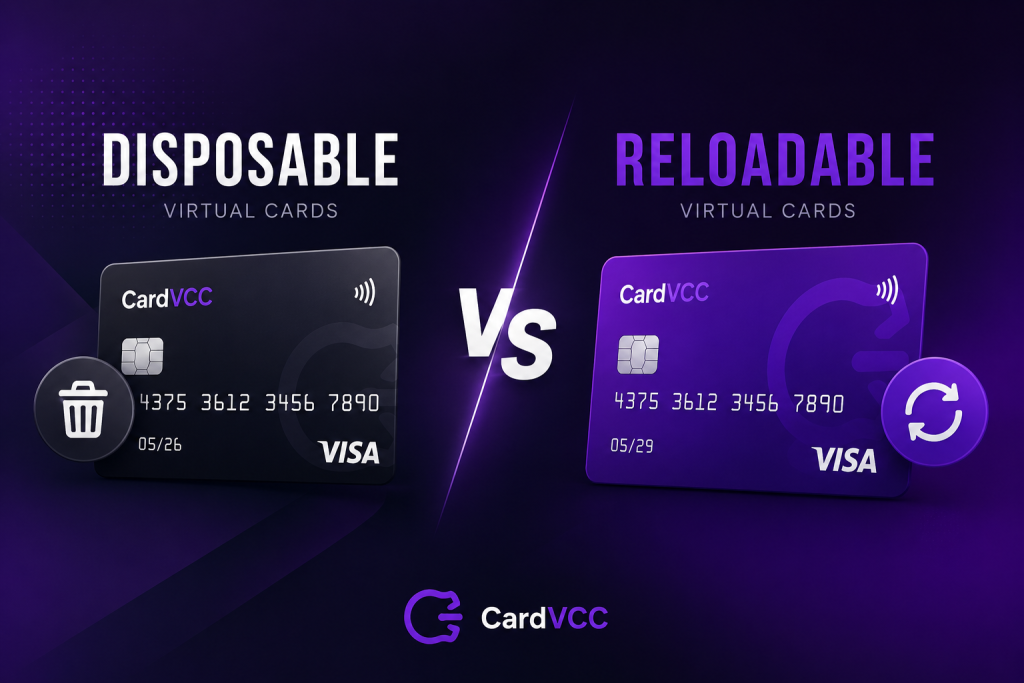
Among all virtual payment solutions, two options dominate the market: Disposable Virtual Cards and Reloadable Virtual Cards.
Although they may look similar at first glance, these two card types serve very different purposes. One is designed for maximum privacy and one-time purchases, while the other is built for long-term use and recurring payments.
If you’re wondering which option is better for your needs, this guide explains everything you need to know—from how each card works to when you should use one over the other.
What Is a Disposable Virtual Card?
A disposable virtual card (vcc) is a temporary payment card created for a limited number of transactions. In many cases, the card is intended for a single purchase. After the payment is completed, the card number can no longer be used.
Instead of exposing your real debit or credit card information to online merchants, you receive a unique virtual card number that acts as a protective layer between you and the website.
Even if the merchant suffers a data breach, your primary financial information remains protected because the disposable card is no longer active.
Think of it as using a temporary phone number when signing up for a service—you gain access without revealing your permanent contact details.
How Disposable Cards Work
The process is surprisingly simple.
First, you generate or purchase a disposable virtual card.
The provider creates a unique card number, expiration date, and CVV code.
You use those details during checkout exactly as you would with any regular Visa or Mastercard.
Once the transaction is approved—or after the predefined spending limit is reached—the card becomes unusable.
Some providers automatically deactivate the card after the first successful payment, while others allow multiple transactions until the balance reaches zero.
Because every card is independent, each purchase has its own payment credentials.
This dramatically reduces the risk of card theft and unauthorized future charges.
Why Disposable Cards Are Becoming More Popular
Cybercrime continues to increase every year.
Online shoppers are more aware than ever that merchants can experience data leaks, payment processors can be compromised, and fraudulent subscriptions can be difficult to cancel.
Disposable virtual cards solve many of these concerns.
Instead of trusting every online store with your primary bank card, you only expose a temporary number.
If something goes wrong, you simply discard the card and create another one.
This approach minimizes financial risk while providing peace of mind.
Benefits of Disposable Cards
Superior Security
Because each card exists for a limited period, stolen payment information has very little value.
Even if hackers obtain the card number, they cannot continue charging it after it expires or reaches its spending limit.
This makes disposable cards one of the safest options for online shopping.
Better Privacy
Many users prefer not to share their personal banking card across dozens of websites.
Disposable cards help separate individual purchases from your primary payment methods.
This additional privacy is especially useful when purchasing from smaller online stores that may not have strong cybersecurity practices.
Excellent for Free Trials
Many streaming platforms, software providers, and AI tools require a payment card before activating a free trial.
A disposable card helps prevent unexpected renewals if you forget to cancel before the trial period ends.
Instead of worrying about future charges, you simply use a temporary card with a controlled balance.
Ideal for Unknown Websites
Sometimes you discover a new online shop offering an attractive product.
The website looks legitimate, but you’ve never purchased from it before.
Rather than exposing your main banking card, using a disposable virtual card significantly reduces your financial exposure.
Spending Control
Disposable cards naturally limit overspending.
Since each card contains only the balance you assign, accidental purchases or unauthorized charges are restricted to that amount.
This makes budgeting much easier.
Limitations of Disposable Cards
Despite their advantages, disposable cards are not suitable for every situation.
For example, they are generally not designed for recurring subscriptions that require the same payment method month after month.
If a service expects to charge the same card every billing cycle, a disposable card may fail after its initial use.
Likewise, customers who frequently purchase from the same merchant may find themselves generating new cards repeatedly.
In these situations, a reloadable virtual card usually offers a more practical solution.
What Is a Reloadable Virtual Card?
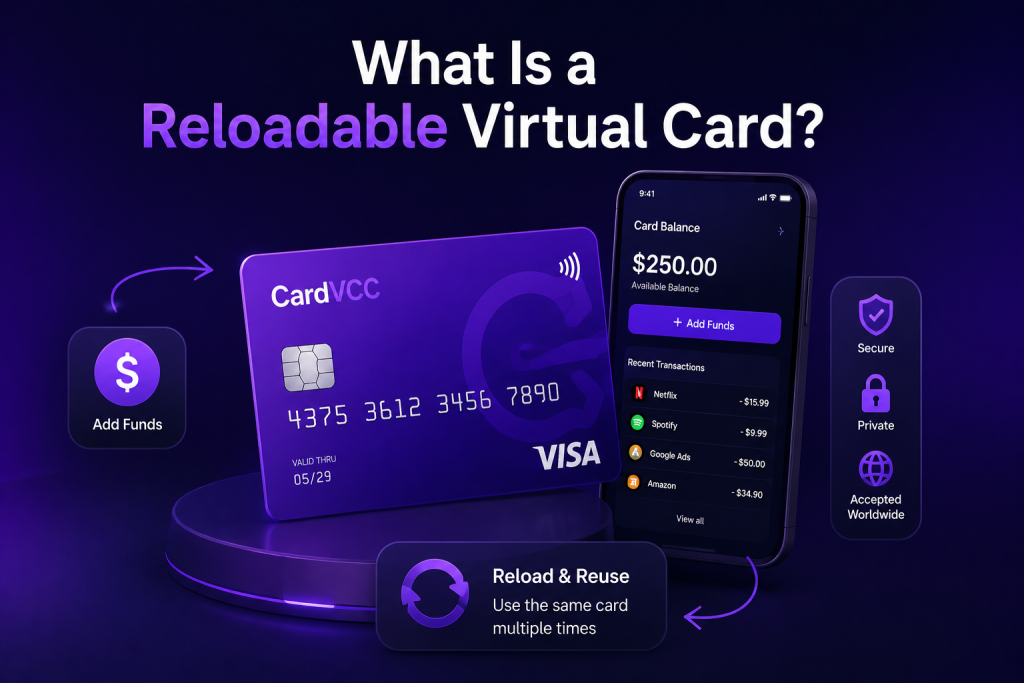
A reloadable virtual card is a digital payment card that remains active over time.
Instead of being discarded after one purchase, the same card can be funded repeatedly whenever additional balance is needed.
This makes it function much more like a traditional debit card—except it exists entirely online.
You receive one card number, one expiration date, and one CVV code that can continue serving your payment needs for months or even years, depending on the provider.
For people who rely on recurring payments, subscriptions, advertising platforms, or business expenses, reloadable cards provide significantly greater convenience.
How Reloadable Cards Work
Once the VCC is issued, you can add funds whenever necessary.
Each time additional balance is loaded, the same payment credentials remain active.
Because the card number does not change, merchants recognize it as the same payment method.
This consistency makes reloadable cards ideal for services that verify payment history or require continuous billing authorization.
Instead of replacing the card after every purchase, you simply top up the available balance whenever needed.
Why Businesses Prefer Reloadable Cards
Companies often need stable payment methods that remain active over long periods.
Marketing agencies, SaaS businesses, freelancers, and e-commerce stores frequently pay recurring invoices every month.
Replacing payment information every billing cycle creates unnecessary administrative work.
A reloadable virtual card eliminates this issue.
Businesses can dedicate one card to advertising, another to software subscriptions, and another to employee expenses while maintaining organized financial records.
This level of flexibility explains why reloadable virtual cards have become increasingly popular among startups and growing online businesses.
Benefits of Reloadable Virtual Cards
While disposable cards excel at privacy and one-time purchases, reloadable virtual cards are designed for long-term convenience. They provide a balance between flexibility, security, and financial control, making them a preferred choice for both individuals and businesses.
Let’s look at the biggest advantages.
Perfect for Recurring Subscriptions
Many online services charge customers automatically every month or every year. Streaming platforms, cloud storage providers, design software, AI tools, VPN services, and business applications all rely on recurring billing.
These services expect the same payment card to remain active.
A reloadable virtual card allows you to maintain uninterrupted service without updating your payment details every billing cycle.
Simply add funds when necessary, and your subscriptions continue working as expected.
Better Expense Management
Using separate virtual cards for different purposes makes budgeting much easier.
For example:
- One card for Google Ads
- One card for Facebook Ads
- One card for software subscriptions
- One card for business travel
- One card for freelance expenses
Instead of reviewing hundreds of transactions on one bank statement, each card has a clear purpose.
This organization saves time and improves financial reporting.
Reduced Risk Compared to Physical Cards
Although reloadable cards remain active longer than disposable cards, they still offer a security advantage over traditional plastic cards.
Since they exist digitally, there is no physical card to lose or steal.
Many providers also allow users to freeze, pause, or replace virtual cards quickly if suspicious activity occurs.
Easier Refund Processing
Refunds often work more smoothly when the original payment card remains active.
If a disposable card has already expired, refund procedures may become more complicated depending on the provider.
With a reloadable virtual card, the merchant simply returns the funds to the same card.
This is particularly useful for travel bookings, software purchases, and online retail.
Suitable for Business Growth
As businesses grow, payment management becomes increasingly complex.
Marketing teams purchase advertising.
Developers pay for cloud infrastructure.
Designers subscribe to creative software.
Customer support teams may use additional SaaS platforms.
Instead of sharing one corporate card among multiple employees, businesses can assign separate reloadable virtual cards to different departments while maintaining centralized financial control.
This approach improves accountability and reduces unnecessary spending.
Disposable vs Reloadable Cards: Side-by-Side Comparison
| Feature | Disposable Card | Reloadable Card |
|---|---|---|
| Card lifespan | Temporary | Long-term |
| Best for | One-time purchases | Ongoing payments |
| Recurring subscriptions | Usually not | Yes |
| Security | Excellent | Very good |
| Privacy | Excellent | Good |
| Refund compatibility | Limited | Better |
| Budget control | Excellent | Excellent |
| Free trials | Ideal | Good |
| Advertising platforms | Sometimes | Excellent |
| Business expenses | Limited | Excellent |
Which Card Should You Use?
The answer depends entirely on your goals.
Let’s look at common situations.
For Online Shopping
If you’re buying from a store you’ve never used before, a disposable virtual card provides the highest level of protection.
Even if the merchant’s database is compromised in the future, your temporary payment credentials are no longer useful.
For stores you trust and purchase from regularly, a reloadable card offers greater convenience.
For Free Trials
Disposable cards are often the preferred option.
Many users sign up for free trials intending to evaluate a service before deciding whether to continue.
A temporary card helps reduce the risk of unexpected renewal charges.
Examples include:
- Video streaming services
- AI software trials
- Productivity applications
- VPN services
- Online learning platforms
For Advertising Platforms
Digital advertising usually requires continuous billing.
Campaigns may run for weeks or months without interruption.
Because of this, reloadable virtual cards are generally more practical.
Many advertisers maintain separate cards for different clients or campaigns.
For example:
- One card for Google Ads campaigns
- One card for Meta Ads
- One card for TikTok Ads
- One card for Microsoft Ads
This separation simplifies accounting while making it easier to monitor advertising costs.
For Freelancers
Freelancers often subscribe to multiple online tools every month.
Graphic designers pay for design software.
Developers pay for hosting services.
Content creators subscribe to AI tools.
A reloadable virtual card keeps these subscriptions active while allowing spending limits to remain under control.
For Businesses
Businesses typically benefit from using both card types.
Disposable cards can be used for one-time vendor purchases or testing new services.
Reloadable cards can handle ongoing operational expenses.
Combining both solutions provides maximum flexibility.
Security Comparison
Security is one of the primary reasons people choose virtual cards.
Both disposable and reloadable cards offer significant improvements compared to exposing a primary debit or credit card everywhere online.
Disposable cards reduce long-term exposure because the payment credentials become unusable after their intended purpose.
Reloadable cards remain active longer but still isolate business or online spending from personal banking accounts.
Regardless of which option you choose, virtual cards reduce the likelihood of exposing your primary financial information across dozens of merchants.
Cost Considerations
Some people assume disposable cards are always cheaper.
Others believe reloadable cards provide better long-term value.
The truth depends on how frequently you make purchases.
If you only need occasional online payments, disposable cards may be sufficient.
If you pay for multiple subscriptions every month or manage business expenses, reloadable cards usually become the more economical choice because the same card continues serving your needs.
Choosing the right card is less about price and more about matching the payment method to your specific usage.
Can You Use Both?
Absolutely.
Many experienced online shoppers use both disposable and reloadable virtual cards simultaneously.
For example:
- Disposable cards for unfamiliar websites.
- Reloadable cards for trusted merchants.
- Disposable cards for free trials.
- Reloadable cards for monthly subscriptions.
- Disposable cards for one-time purchases.
- Reloadable cards for business operations.
Using both gives you the flexibility to optimize security without sacrificing convenience.
How to Choose the Right Virtual Card Provider
Not all virtual card providers offer the same features.
Before selecting one, consider the following:
- Instant card issuance.
- Strong security measures.
- Transparent pricing.
- Reliable customer support.
- Easy balance management.
- Compatibility with popular online merchants.
- Support for international payments.
- Ability to create multiple cards if needed.
Choosing a provider that combines these features helps ensure a smoother payment experience.
Frequently Asked Questions
Are disposable cards safer?
They generally offer stronger protection for one-time purchases because the payment credentials are temporary.
Can I reload a disposable card?
In most cases, no. Disposable cards are designed for temporary use.
Can I use a reloadable card for subscriptions?
Yes. Reloadable virtual cards are specifically suited for recurring payments.
Which card is better for online shopping?
If you’re buying from an unfamiliar website, a disposable card provides additional protection. For trusted merchants and repeat purchases, a reloadable card is usually more convenient.
Can businesses use virtual cards?
Yes. Many businesses use virtual cards to separate expenses, improve budgeting, and manage subscriptions more efficiently.
Final Thoughts
There is no universal winner between disposable and reloadable virtual cards.
Instead, each serves a different purpose.
Disposable cards prioritize privacy, security, and protection during one-time purchases.
Reloadable cards prioritize convenience, recurring payments, and long-term financial management.
Many users find that combining both options provides the best overall experience.
Whether you’re shopping online, subscribing to digital services, managing advertising campaigns, or running a business, selecting the appropriate virtual card helps improve security while giving you greater control over your spending.
Looking for a Reliable Virtual Card?
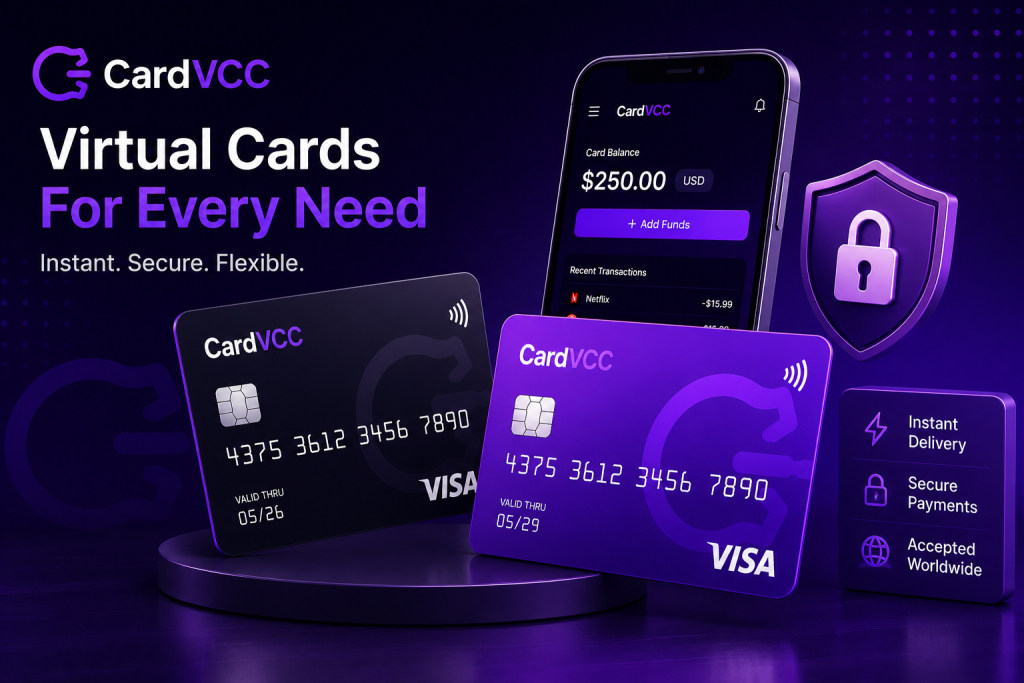
If you need a virtual card that’s available within minutes, CardVCC offers solutions designed for modern online payments.
Whether you’re looking for a disposable virtual card for secure one-time purchases or a reloadable card for subscriptions, advertising, and everyday online spending, CardVCC provides fast delivery, secure payment credentials, and flexible options to help you pay confidently across a wide range of online services.
Choose the card that fits your needs, fund it with the balance you require, and enjoy a safer way to shop and pay online.