
Bank of America charges $30 for outgoing domestic wire transfers and $45 for outgoing international wire transfers, with incoming domestic wires costing $15 and incoming international wires costing $16.
These fees apply to standard personal checking accounts and vary by transfer method and account tier. Preferred Rewards members receive discounts of 25% to 75% depending on their tier level. You can reduce costs by initiating transfers online instead of visiting a branch.
TL;DR: Bank of America charges $30 for outgoing domestic wires and $45 for outgoing international wires. Incoming wires cost $15 (domestic) and $16 (international). Preferred Rewards members get fee reductions up to 75%, and free alternatives like Zelle and ACH transfers can eliminate wire fees entirely for many transactions.
Last reviewed and updated: May 2026 — verified against current regulatory guidance and financial data.
If you’re wondering how much does Bank of America charge for wire transfers, you’re asking the right question before committing to a transaction. This guide draws on analysis of Bank of America’s published fee schedules, Consumer Financial Protection Bureau (CFPB) remittance transfer rules, and Federal Reserve payment system data to give you the most accurate and complete breakdown available. Whether you’re sending a down payment on a home, paying international tuition, or wiring funds to family overseas, every dollar in fees matters.
- Wire Transfer
- An electronic method of sending money from one bank account to another through a secure network such as Fedwire (domestic) or SWIFT (international). Wire transfers are irrevocable once processed, meaning they cannot be reversed like ACH payments or credit card transactions.
- SWIFT Code
- A unique identification code assigned to financial institutions for international wire transfers. Bank of America’s SWIFT code is BOFAUS3N for USD transfers and BOFAUS6S for foreign currency transfers.
- Intermediary Bank Fee
- An additional charge imposed by a third-party bank that routes an international wire transfer between the sending and receiving banks. These fees are separate from Bank of America’s stated wire transfer charges and typically range from $15 to $30.
Table of Contents
- Complete Bank of America Wire Transfer Fee Breakdown
- How Much Does Bank of America Charge for Domestic Wire Transfers
- International Wire Transfer Fees at Bank of America
- How Much Does Bank of America Charge for Wire Transfers by Account Type
- Preferred Rewards Wire Transfer Fee Discounts
- Bank of America Wire Transfer Limits
- Wire Transfer Processing Times
- How to Send a Wire Transfer with Bank of America
- How to Receive a Wire Transfer at Bank of America
- Wire Transfers vs. Debit Card Transactions
- How to Avoid or Reduce Wire Transfer Fees
- Alternatives to Bank of America Wire Transfers
- Bank of America Wire Fees vs. Other Major Banks
- Sources & References
- Frequently Asked Questions
Complete Bank of America Wire Transfer Fee Breakdown
Bank of America charges between $0 and $45 for wire transfers depending on the direction (incoming vs. outgoing), destination (domestic vs. international), and your account tier. The table below summarizes every standard wire transfer fee at Bank of America for personal accounts.
“No fee for incoming domestic wire transfers and stop payments. Additional fees apply for outgoing wires and incoming international wires.”
| Transfer Type | Online / Mobile Fee | In-Branch / Phone Fee |
|---|---|---|
| Outgoing Domestic Wire | $30 | $30 |
| Incoming Domestic Wire | $15 | $15 |
| Outgoing International Wire (USD) | $45 | $45 |
| Outgoing International Wire (Foreign Currency) | $0 | $45 |
| Incoming International Wire | $16 | $16 |
Expert insight: Many people believe that online wire transfers at Bank of America cost less than in-branch transfers. The reality is that Bank of America charges the same $30 flat fee for domestic outgoing wires regardless of channel. The notable exception is outgoing international wires sent in a foreign currency online, which carry a $0 wire fee — though Bank of America still applies a currency exchange rate markup that effectively serves as a hidden cost.
Understanding unexpected charges on your bank statement is important whether you’re dealing with wire fees or unfamiliar debit card charges from San Francisco. Always verify every fee before it posts to your account.
How Much Does Bank of America Charge for Domestic Wire Transfers
Bank of America charges $30 for every outgoing domestic wire transfer and $15 for every incoming domestic wire transfer. These fees apply uniformly across standard personal checking accounts, regardless of whether you initiate the transfer online, through the mobile app, or at a branch.
“Fedwire Funds Service processed approximately 204.5 million transfers in 2023, with an average value of $5.8 million per transfer.”
Domestic wires travel through the Fedwire system, operated by the Federal Reserve. This system settles transactions in real time, which is why wire transfers cost more than ACH payments. The $30 outgoing fee covers Bank of America’s operational costs for processing, compliance verification, and same-day settlement.
Key Details About Domestic Wire Fees
- Outgoing wires: $30 flat fee per transaction (online, mobile, or branch)
- Incoming wires: $15 per transaction
- No difference between online and in-branch for domestic transfers
- Same-day settlement if submitted before the cutoff time (typically 5:00 p.m. ET for online wires)
- Preferred Rewards members receive discounted or waived fees depending on tier
What most guides don’t mention is that Bank of America does not charge a separate fee for canceling or recalling a domestic wire transfer — but only if you catch it before the bank processes it. Once a domestic wire settles through Fedwire, it is final and irrevocable. You cannot reverse it like an ACH debit or credit card payment.
International Wire Transfer Fees at Bank of America
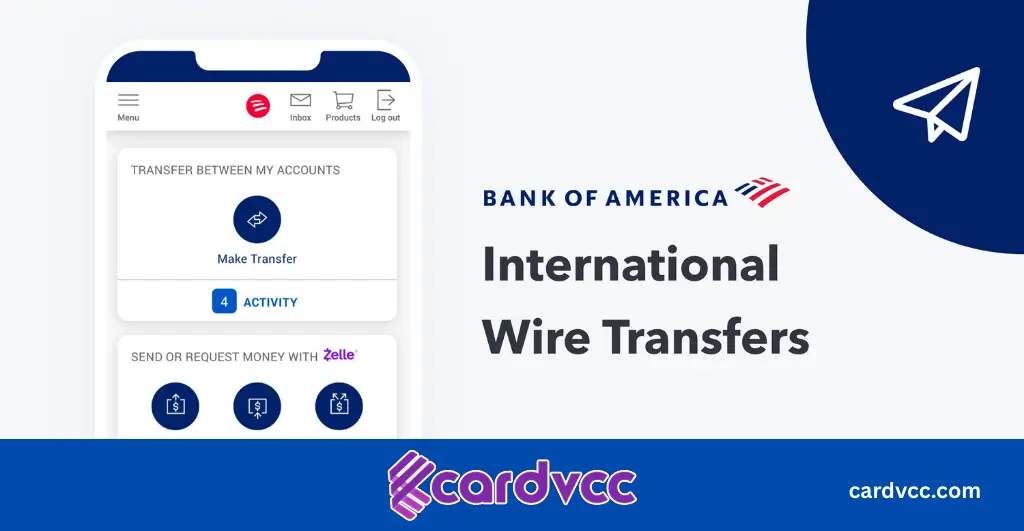
Bank of America charges $45 for outgoing international wire transfers sent in U.S. dollars and $0 for outgoing international wires sent in a foreign currency online. Incoming international wires cost $16 regardless of currency. However, these stated fees do not tell the whole story.
“For remittance transfers, providers must disclose the exchange rate, all fees, and the amount to be received by the designated recipient in the foreign currency.”
Breakdown of International Wire Costs
| Fee Component | Amount | Notes |
|---|---|---|
| Outgoing wire fee (USD transfer) | $45 | Same fee online, mobile, or in-branch |
| Outgoing wire fee (Foreign currency, online) | $0 | No wire fee, but exchange rate markup applies |
| Outgoing wire fee (Foreign currency, in-branch) | $45 | Standard fee applies |
| Incoming international wire | $16 | Deducted from received amount |
| Exchange rate markup | Varies (typically 1%–3%) | Built into the conversion rate |
| Intermediary bank fees | $15–$30 | Charged by third-party banks in the transfer chain |
| Receiving bank fees | Varies | Charged by the recipient’s bank abroad |
The Hidden Cost: Currency Exchange Rate Markup
Bank of America’s $0 fee on foreign currency wires sent online sounds like a great deal. But the bank recovers that cost — and more — through its exchange rate markup. The rate Bank of America offers is not the mid-market rate you see on Google or XE.com. It includes a spread, typically between 1% and 3%, that functions as a hidden fee.
For example, if you send $10,000 to a recipient in the European Union and the mid-market rate is 1 EUR = 1.08 USD, Bank of America might offer you a rate of 1 EUR = 1.11 USD. That 3-cent difference on every euro translates to roughly $270 in additional cost on a $10,000 transfer — far more than the $45 wire fee you would have paid on a USD transfer.
This is why the CFPB’s Remittance Transfer Rule requires banks to disclose the exact exchange rate and all fees before you confirm the transaction. Always compare the offered rate against the mid-market rate before committing.
How Much Does Bank of America Charge for Wire Transfers by Account Type
The wire transfer fee you pay at Bank of America depends heavily on your account type and relationship tier. Standard checking account holders pay the full published fees, while Preferred Rewards members receive significant discounts.
| Account Type | Outgoing Domestic | Incoming Domestic | Outgoing International (USD) | Incoming International |
|---|---|---|---|---|
| Advantage SafePass / Plus Banking | $30 | $15 | $45 | $16 |
| Advantage Relationship Banking | $30 | $15 | $45 | $16 |
| Preferred Rewards Gold | $30 (25% discount available) | $15 | $45 (25% discount available) | $16 |
| Preferred Rewards Platinum | $30 (50% discount available) | $15 | $45 (50% discount available) | $16 |
| Preferred Rewards Platinum Honors | $30 (75% discount available) | $15 | $45 (75% discount available) | $16 |
“Preferred Rewards members enjoy benefits including discounts on wire transfer fees, with Platinum Honors members receiving the highest level of savings.”
If you have accounts at multiple financial institutions and want to understand how different providers structure their fees, you might also be interested in learning whether Netspend charges a monthly fee or how Edward Jones charges fees for CDs.
Preferred Rewards Wire Transfer Fee Discounts
Bank of America’s Preferred Rewards program offers the most meaningful way to reduce wire transfer costs at the bank. The program has three tiers based on your combined balance across Bank of America banking and Merrill investment accounts.
Preferred Rewards Tier Requirements and Wire Fee Discounts
| Tier | Combined Balance Required | Wire Fee Discount | Effective Outgoing Domestic Fee | Effective Outgoing International Fee |
|---|---|---|---|---|
| Gold | $20,000 | 25% | $22.50 | $33.75 |
| Platinum | $50,000 | 50% | $15.00 | $22.50 |
| Platinum Honors | $100,000 | 75% | $7.50 | $11.25 |
At the Platinum Honors level, a $30 domestic outgoing wire effectively costs just $7.50. If you send wires frequently — say, four domestic wires per month — that discount saves you $90 monthly compared to the standard fee. Over a year, that’s $1,080 in savings from the wire fee discount alone.
The combined balance includes checking accounts, savings accounts, CDs, IRAs, and Merrill Edge investment accounts. You do not need to keep all funds in a single account. The balance is calculated as a three-month average, so a brief dip below the threshold won’t immediately disqualify you.
Bank of America Wire Transfer Limits
Bank of America sets daily and per-transaction wire transfer limits that vary by channel and account history. Understanding these limits prevents delays and rejected transactions.
“Financial institutions must file Currency Transaction Reports (CTRs) for any transaction exceeding $10,000 in a single day.”
Standard Wire Transfer Limits
- Online/mobile daily limit: Typically $1,000 to $3,500 per day for new accounts, increasing over time
- Established account online limit: Up to $100,000 per day for domestic wires
- In-branch limit: No standard cap — higher amounts are processed in-branch with additional verification
- International wire limits: Generally mirror domestic limits but may be lower for certain destination countries
Transfers exceeding $10,000 trigger mandatory Currency Transaction Report (CTR) filings with FinCEN under the Bank Secrecy Act. This is a federal requirement, not a Bank of America policy — it applies at every U.S. financial institution. The filing does not block your transfer or add fees; it simply creates a record for anti-money laundering compliance.
For very large transfers (over $100,000), contact Bank of America’s wire transfer department at least one business day in advance. The bank may need to verify your identity in person, confirm the recipient’s details, and ensure sufficient funds are available.
Wire Transfer Processing Times
Domestic wire transfers through Bank of America typically settle within the same business day when initiated before the cutoff time. International wires take one to five business days depending on the destination country and the number of intermediary banks involved.
Domestic Wire Processing
- Cutoff time: 5:00 p.m. ET for most online domestic wires
- Same-day settlement: Transfers submitted before the cutoff
- Next-business-day settlement: Transfers submitted after the cutoff, on weekends, or on federal holidays
International Wire Processing
| Destination Region | Typical Processing Time |
|---|---|
| Canada, Mexico | 1–2 business days |
| Western Europe, UK | 1–3 business days |
| Asia-Pacific | 2–4 business days |
| Africa, South America | 3–5 business days |
“SWIFT gpi has enabled 89% of cross-border payments to be credited to end beneficiaries within 24 hours.”
Factors That Delay Wire Transfers
- Incorrect recipient details: A wrong account number, SWIFT code, or routing number forces the wire to be returned — adding days to the process
- Compliance holds: Large transfers or transfers to high-risk countries undergo additional anti-money laundering reviews
- Time zones: A wire sent at 4:00 p.m. ET to Asia arrives outside business hours, delaying processing until the next local business day
- Intermediary banks: Each correspondent bank in the chain adds processing time and may deduct fees from the transfer amount
- Weekends and holidays: Banks do not process wires on non-business days in either the sending or receiving country
How to Send a Wire Transfer with Bank of America
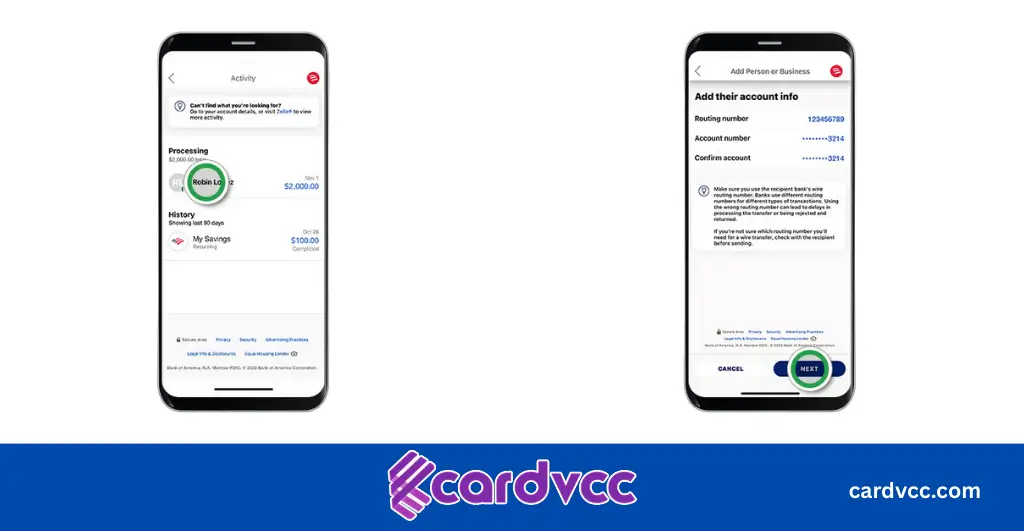
Sending a wire transfer through Bank of America takes five to ten minutes online. You need the recipient’s full name, bank name, routing number (domestic) or SWIFT code (international), and account number before you begin.
Step-by-Step: Sending Online or via Mobile App
- Log in to Bank of America Online Banking or open the Mobile Banking app
- Navigate to Transfers → select “Wire Transfer” from the menu
- Choose domestic or international and select the funding account
- Enter recipient details: full legal name, bank name, routing number or SWIFT code, account number, and the transfer amount
- Review all details carefully — wire transfers are irrevocable once processed
- Confirm and submit the wire transfer; you’ll receive a confirmation number
- Track the transfer through your account’s activity or transaction history
Bank of America Wire Transfer Details You’ll Need
If someone is sending a wire to your Bank of America account, provide them with the following information:
- Bank Name: Bank of America, N.A.
- Domestic Routing Number: Varies by state (check your account for the correct number)
- SWIFT Code: BOFAUS3N (for USD) or BOFAUS6S (for foreign currency)
- Your Account Number: Found on your checks or in online banking
- Bank Address: 100 N Tryon St, Charlotte, NC 28255
Double-check every digit. A single wrong number in the routing or account field can send funds to the wrong account, and recovering them is difficult and time-consuming.
How to Receive a Wire Transfer at Bank of America
Receiving a domestic wire transfer at Bank of America costs $15, while receiving an international wire costs $16. Bank of America deducts the fee directly from the incoming wire amount — you don’t need to authorize it separately.
Steps to Receive a Wire
- Gather your bank information: account number, routing number (domestic) or SWIFT code (international), and Bank of America’s address
- Share the details with the sender using a secure channel — never send bank details via unencrypted email
- Monitor your account: domestic wires typically arrive the same business day; international wires take one to five business days
- Verify the amount: confirm that the received amount matches expectations after fee deductions
Many people assume incoming domestic wires at Bank of America are free. They are not — the $15 incoming domestic wire fee is clearly listed in Bank of America’s Schedule of Fees. Some competing banks, such as Capital One, do not charge for incoming domestic wires, so this is a meaningful distinction when choosing where to receive funds.
Wire Transfers vs. Debit Card Transactions
Wire transfers and debit card transactions both pull money directly from your checking account, but they function very differently in terms of cost, speed, fraud protection, and reversibility.
| Feature | Wire Transfer | Debit Card Transaction |
|---|---|---|
| Cost | $15–$45 per transaction | Typically free for purchases |
| Speed | Same day to 5 business days | Instant at point of sale |
| Reversibility | Irrevocable once processed | Disputable under Regulation E |
| Fraud Protection | Very limited | Regulation E provides $50 liability cap if reported within 2 days |
| Transaction Limit | Up to $100,000+ per day | Typically $500–$5,000 daily |
| Best For | Large transfers, real estate closings, international payments | Everyday purchases, ATM withdrawals |
The critical difference is fraud protection. Under Regulation E (Electronic Fund Transfer Act), debit card transactions enjoy robust consumer protections — your maximum liability is $50 if you report unauthorized use within two business days. Wire transfers have no such protection. Once a wire settles, the money is gone. This makes wire transfer fraud particularly devastating.
If you’ve noticed an unfamiliar charge on your debit card, you can dispute it through your bank. With a wire transfer, you have no comparable recourse. Always verify the recipient’s identity and bank details before sending a wire.
How to Avoid or Reduce Wire Transfer Fees
Reducing how much Bank of America charges for wire transfers is possible through several strategies. Some approaches eliminate the fee entirely, while others cut it significantly.
1. Join Preferred Rewards
Maintaining a $20,000 combined balance across Bank of America and Merrill accounts qualifies you for the Gold tier, which provides a 25% wire fee discount. At the Platinum Honors level ($100,000 combined balance), your discount reaches 75%.
2. Send International Wires in Foreign Currency Online
Bank of America waives the $45 wire fee for outgoing international transfers sent in a foreign currency through online banking. Be aware that the exchange rate markup replaces the wire fee, so compare the total cost against a USD wire before choosing.
3. Consolidate Transfers
Wire fees are charged per transaction, not by amount. Sending one $10,000 wire costs the same as one $500 wire. Batch your payments when possible to minimize the number of transactions.
4. Use Free Alternatives When Possible
- Zelle: Free, instant transfers to other Zelle-enrolled accounts (built into Bank of America’s app)
- ACH transfers: Free or very low cost for domestic transfers; takes 1–3 business days
- Bill Pay: Bank of America’s bill pay service sends payments for free
5. Negotiate with Your Banker
If you’re a long-standing customer with significant deposits, ask your relationship manager to waive or reduce wire fees. Banks have discretion to accommodate high-value clients, especially when retention is at stake.
Alternatives to Bank of America Wire Transfers
Wire transfers are not the only way to move money. Several alternatives cost less — or nothing at all — depending on your speed and destination requirements.
| Method | Cost | Speed | Best For |
|---|---|---|---|
| Zelle (via Bank of America) | Free | Minutes | Domestic person-to-person transfers up to $3,500/day |
| ACH Transfer | Free | 1–3 business days | Regular domestic payments (bills, rent, payroll) |
| Wise (formerly TransferWise) | 0.5%–1.5% of amount | 1–2 business days | International transfers at mid-market exchange rates |
| PayPal / Venmo | Free (personal) / 1.75% instant | Instant to 3 days | Casual payments to friends, family, small businesses |
| Cashier’s Check | $10–$15 | Same day (in person) | Large payments requiring guaranteed funds |
| Bank of America Bill Pay | Free | 1–5 business days | Recurring bills and vendor payments |
“ACH Network volume reached 31.5 billion payments in 2023, representing a 4.8% increase over the prior year.”
For international transfers specifically, third-party services like Wise often deliver better value than bank wires. These services use the mid-market exchange rate and charge a transparent percentage fee. On a $5,000 transfer to Europe, you might save $50 to $150 compared to a Bank of America international wire when you factor in both the wire fee and the exchange rate markup.
If you use virtual credit card apps for online payments, those can also serve as a secure alternative for certain transactions that don’t require direct bank-to-bank transfers.
Bank of America Wire Fees vs. Other Major Banks
Bank of America’s wire transfer fees fall in the mid-range compared to other large U.S. banks. Here is how the major banks compare for standard personal accounts.
| Bank | Outgoing Domestic | Incoming Domestic | Outgoing International | Incoming International |
|---|---|---|---|---|
| Bank of America | $30 | $15 | $0–$45 | $16 |
| Chase | $25 (online) / $35 (branch) | $15 | $40–$50 | $15 |
| Wells Fargo | $30 | $15 | $45 | $16 |
| Citibank | $25 (online) / $35 (branch) | $15 | $35–$45 | $15 |
| Capital One | $30 | $0 | $45 | $0 |
| Marcus by Goldman Sachs | $0 | $0 | N/A | N/A |
Notable differences: Capital One does not charge for incoming wires (domestic or international), making it a strong choice if you frequently receive wire transfers. Marcus by Goldman Sachs charges nothing for domestic wires but does not support international wires. Chase offers a lower $25 fee for online domestic wires compared to Bank of America’s flat $30.
The reason Bank of America charges for wire transfers is straightforward: each wire requires real-time settlement through the Fedwire or SWIFT network, compliance review, and manual processing for international transfers. These operational costs are passed to the consumer. Banks that waive these fees typically subsidize them through other revenue streams or simply absorb the cost to attract deposits.
Sources & References
- Bank of America — Personal Schedule of Fees
- Bank of America — Preferred Rewards Program
- Consumer Financial Protection Bureau — Regulation E, Remittance Transfer Rule
- Federal Reserve — Fedwire Funds Service
- FinCEN — Bank Secrecy Act
- SWIFT — Global Payments Innovation
- Federal Reserve — Payments Study 2024
Frequently Asked Questions
How much does Bank of America charge for a domestic wire transfer?
Bank of America charges $30 for outgoing domestic wire transfers and $15 for incoming domestic wire transfers. These fees apply to standard personal checking accounts regardless of whether you send the wire online, through the mobile app, or at a branch. Preferred Rewards members receive discounts of 25% to 75% depending on their tier.
How much does Bank of America charge for an international wire transfer?
Bank of America charges $45 for outgoing international wire transfers sent in U.S. dollars and $0 for wires sent in foreign currency online (though an exchange rate markup applies). Incoming international wires cost $16. Intermediary banks may deduct additional fees of $15 to $30 from the transfer amount.
Does Bank of America charge a fee for receiving a wire transfer?
Yes. Bank of America charges $15 for incoming domestic wire transfers and $16 for incoming international wire transfers. The fee is automatically deducted from the received amount. If the international wire arrives in a foreign currency, an exchange rate markup is also applied during conversion to U.S. dollars.
Can Bank of America waive wire transfer fees?
Bank of America offers wire fee discounts through its Preferred Rewards program. Platinum Honors members (with $100,000+ in combined balances) receive a 75% discount, bringing a $30 domestic wire down to $7.50. Additionally, relationship managers may waive fees for high-value clients on a case-by-case basis, though this is not guaranteed.
How long does a Bank of America wire transfer take?
Domestic wire transfers through Bank of America typically settle the same business day when initiated before 5:00 p.m. ET. International wires take one to five business days depending on the destination country, currency, and the number of intermediary banks involved. Transfers initiated after the cutoff time or on weekends process the next business day.
What is the wire transfer limit at Bank of America?
Bank of America’s online wire transfer limit is typically up to $100,000 per day for established accounts, though new accounts may start with limits as low as $1,000 to $3,500 per day. In-branch wire transfers do not have a standard cap but require additional identity verification for large amounts. Transfers exceeding $10,000 trigger mandatory federal reporting under the Bank Secrecy Act.
Is it cheaper to use Zelle instead of a wire transfer at Bank of America?
Yes. Zelle is free and built directly into Bank of America’s mobile app and online banking. It sends domestic payments in minutes between enrolled accounts. However, Zelle has a daily limit (typically $3,500 for Bank of America customers) and only works for domestic transfers. For large amounts or international payments, a wire transfer remains necessary.
What is Bank of America’s SWIFT code for international wire transfers?
Bank of America’s SWIFT code is BOFAUS3N for wire transfers sent in U.S. dollars and BOFAUS6S for transfers involving foreign currencies. You’ll also need your account number, the bank’s routing number for your state, and Bank of America’s address (100 N Tryon St, Charlotte, NC 28255) to provide to the sender.
Final Word on Bank of America Wire Transfer Fees
Understanding how much does Bank of America charge for wire transfers helps you plan every transaction with confidence. The core fees are straightforward: $30 outgoing domestic, $15 incoming domestic, $45 outgoing international (USD), and $16 incoming international. But the real cost often extends beyond these published figures when you factor in exchange rate markups, intermediary bank deductions, and the receiving bank’s own charges.
The most effective way to minimize these costs is to enroll in the Preferred Rewards program, consolidate transfers, and use free alternatives like Zelle or ACH when wire speed isn’t essential. For international transfers, always compare Bank of America’s total cost (wire fee plus exchange rate) against specialized transfer services before committing.
Ultimately, Bank of America’s wire transfer fees align with major bank industry averages — they’re neither the cheapest nor the most expensive option. The bank’s strength lies in its nationwide branch network, robust online platform, and the Preferred Rewards discount structure that can reduce fees substantially for loyal customers. Armed with the information in this guide, you can choose the right transfer method for every situation and keep more money in your account.